

Juggling parenthood and life’s other responsibilities can be overwhelming at times. One of the most important things you can do for your little ones is to ensure they have enough quality time with educational play activities. Sorting shapes is an easy way to provide them with a fun yet an engaging activity that will help them gain vital cognitive skills while sparking their creativity—all without taking up too much of your already precious time.
Let’s investigate the numerous benefits sorting shapes can offer and discover why this educational game should be part of your family’s routine!
Table of Contents
Benefits of sorting shapes for children.
Sorting shapes can be beneficial for children because it helps them to learn about shapes, colours, and sizes. It also helps them to develop problem-solving skills and organizational skills. When children are young, sorting shapes can help them to learn the different shapes and colours. As they get older, they can use sorting to organize things in their lives such as their school supplies or their room.
Sorting can also help them to develop problem-solving skills by teaching them how to figure out which shape goes in which spot or how to figure out how to make a certain shape. Overall, sorting shapes is a fun and educational activity that can benefit children in several ways.
Sorting shapes can help with cognitive skills and creativity.
Sorting activities can help with cognitive skills and creativity because it helps with problem-solving and improving dexterity. When a child is sorting shapes, they are using their brain to figure out the best way to put them together. This is a problem-solving skill that will help them in school and life.
Learning shapes and colours is also important for children because it helps them understand the world around them. Having dexterity is also important. It helps children with their hand-eye coordination, which will help them later in life when they are doing things like writing or using a computer.
Tips on how to make sorting shapes activities fun and engaging for kids.
There are a few different ways to make sorting shapes activities fun and engaging for kids. One way is to use colourful shapes and have the children sort them by colour.
Another way is to use different shapes and have the children sort them by type. Either way, it is important to make the activity as engaging as possible for the children. This can be done by providing a variety of shapes for them to sort, or by making the activity interactive.
For example, if you are having the children sort shapes by colour, provide a few shapes of each colour for them to work with. If you are having the children sort shapes by type, provide a variety of shapes for them to examine. You can also get creative with how you present the activity to the children. If you are having them sort shapes by colour, you can put each shape in a different-coloured bag and have the children take turns pulling out a shape and sorting it.
Examples of shape sorting games that can be played at home.
There are a variety of different games that can be played at home. One popular game is to use a set of foam shapes and have players match the shapes by colour and size. Another game is to use a set of cards with different shapes on them and have players match the cards by shape.
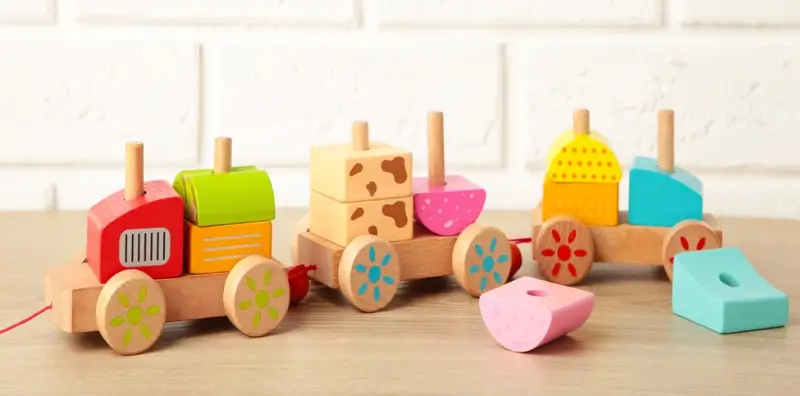
Yet another game is to use a set of plastic or wooden blocks and have players match the blocks by colour and shape. Regardless of the game that is chosen, children will enjoy practicing their shape sorting skills while having fun.
Sorting shapes is a great activity for children of all ages. Not only is it fun, but it can also help with cognitive skills and creativity.
Frequently asked questions about sorting shapes
1. What skills do children develop through sorting shapes?
Sorting shapes strengthens early maths foundations such as classification, comparison, and pattern recognition. It also encourages attention to detail and independent thinking as children decide how and why objects belong together.
2. Are sorting shapes considered a STEM activity?
Yes. this introduces basic STEM concepts like categorising, analysing differences, and understanding spatial relationships. These early logical skills form part of foundational science and mathematics learning.
3. How long should a sorting shapes activity last?
For toddlers, 5–10 minutes is often enough. Preschoolers may stay engaged for 15–20 minutes, especially if the activity includes variety or small challenges. Short, focused sessions are more effective than long ones.
4. What is the difference between sorting by shape and sorting by colour?
Sorting by shape focuses on recognising form and structure, while sorting by colour develops visual awareness. Combining both encourages higher-level thinking, as children must evaluate more than one characteristic at a time.
5. Are wooden or plastic sorting shapes better?
Both work well. Wooden sorting shapes and building blocks are durable and tactile, while plastic versions are lightweight and often more colourful. The best choice depends on your child’s age and sensory preference.
6. How can parents encourage independent play with sorting shapes?
Start by demonstrating once, then step back. Ask open-ended questions like, “Why did you put that there?” or “Can you find another way to sort them?” This encourages confidence and independent reasoning without turning play into a lesson.




0 Comments