

Play-based learning is often seen as something separate from learning, yet in early childhood, it is one of the most effective ways children develop essential skills. When children are given the freedom to explore, imagine, and interact with their environment, learning becomes a natural and engaging process rather than a structured task.
It is an approach where children learn through exploration, interaction, and hands-on experiences. Rather than relying only on formal instruction, it allows children to build skills through activities that feel natural, meaningful, and engaging. Adults still play an important role by preparing the environment, providing appropriate materials, and supporting learning through observation and guidance.
In this article, we explore the value of play-based learning in early childhood, an approach where children learn through exploration and experience, and how it supports development across different areas while helping parents encourage learning through play at home.
Table of Contents
Why Play-based Learning Matters in Early Childhood
Play-based learning supports development across multiple areas at the same time. Instead of focusing on a single skill, it allows children to build language, social understanding, physical ability, and confidence through connected, meaningful experiences. In South Africa, early childhood development organisations such as Grow ECD highlight that play is central to how children develop cognitive, social, and emotional skills from an early age.
Communication Skills
Language develops naturally during play as children describe actions, ask questions, and respond to others. These interactions help build vocabulary, sentence structure, and confidence in expressing ideas. Whether children are playing independently or with others, they are constantly practising how to communicate in ways that feel relevant to them.
Imaginative Thinking
Play encourages children to think beyond what is directly in front of them. Through pretend scenarios and open-ended activities, they explore ideas, create stories, and experiment with different outcomes. This supports creativity, flexible thinking, and early problem-solving skills that carry into later learning.
Social Awareness
When children play together, they learn how to share, take turns, and respond to different situations. These moments help them understand emotions, build empathy, and navigate relationships. Even small interactions, like negotiating roles or resolving disagreements, contribute to stronger social and emotional development.
Confidence and Independence
Play gives children the opportunity to make choices and take control of their own learning. As they try new ideas, solve problems, and see results from their efforts, they build confidence in their abilities. This sense of independence encourages persistence and a willingness to explore new challenges.
Physical Coordination
Many forms of play involve movement and hands-on interaction, which support both fine and gross motor development. Activities such as building, threading, climbing, or balancing help improve coordination, strength, and control. These physical skills are essential for everyday tasks and overall development.
What Children Learn Hhrough Play-Based Learning
Play-based learning allows children to develop a wide range of skills in a way that feels natural and engaging. Rather than learning in isolated steps, children build understanding through experience, repetition, and exploration. These skills often develop together during play, creating a more connected and meaningful learning process.
Problem Solving and Critical Thinking
During play, children are constantly making decisions, testing ideas, and adjusting their approach when something does not work. Whether building a structure, completing a puzzle, or creating a game, they learn how to think through challenges and find solutions. This builds resilience and encourages flexible thinking.
Early Maths Concepts
Play introduces children to basic maths ideas in a practical way. Sorting objects, stacking blocks, recognising patterns, and comparing sizes all help develop early numeracy skills. These concepts are easier to understand when children can see and manipulate them during play.
Language and Early Literacy
Storytelling, role play, and conversations during play all support language development. Children learn new words, practise sentence structure, and begin to understand how communication works. These early experiences form the foundation for reading and writing later.
Emotional Understanding
Play gives children a safe space to explore feelings and situations. Through role play and interaction, they begin to understand emotions, recognise different responses, and learn how to manage their own reactions. This supports emotional regulation and overall well-being.
Creativity and Expression
Open-ended play encourages children to use their imagination and express their ideas freely. Whether through building, drawing, or pretend play, they learn to think creatively and communicate their thoughts in different ways. This kind of expression supports both cognitive and emotional development.
Examples of Play-Based Learning in Everyday Life
Play-based learning is not limited to classrooms or structured environments. It happens naturally in everyday settings where children are given the time, space, and freedom to explore. Understanding how play shows up in different environments can help parents recognise and support learning as it happens.
At Home
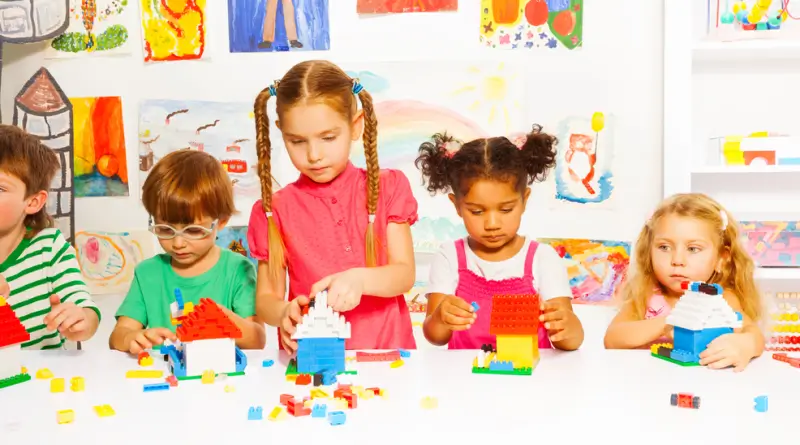
At home, play-based learning often grows out of simple, everyday moments. A child might turn a cardboard box into a car, use kitchen items for pretend cooking, or build structures using cushions and blankets. These activities encourage imagination, problem solving, and independence without needing specialised materials.
Caregivers can support this type of learning by allowing unhurried time for play, asking open-ended questions, and joining in when invited. The goal is not to direct the activity, but to support the child’s ideas and give them space to explore.
In the Classroom
In early learning environments, play-based learning is supported through carefully prepared spaces and materials. Classrooms are often set up with different areas for building, role play, reading, and sensory exploration. These spaces allow children to move between activities and engage with a variety of learning experiences throughout the day.
Teachers observe how children interact with materials and use that insight to introduce new challenges or extend learning. This approach creates a balance between structure and flexibility, helping children stay engaged while developing key skills.
In Therapy Settings
Play is widely used in therapy because it allows children to engage comfortably while working towards specific developmental goals. Speech and occupational therapists often use play to support communication, coordination, and emotional development.
For example, a simple game can be used to practise turn-taking, while building activities may support fine motor skills and planning. Because the activities feel familiar and enjoyable, children are more likely to participate and make progress without feeling pressured.
How to Support Play-Based Learning at Home
Supporting play-based learning at home does not require specialised equipment or a structured programme. What matters most is creating an environment where children feel comfortable exploring, experimenting, and following their own ideas. Small adjustments to daily routines and spaces can make a meaningful difference.
Create Space for Open-Ended Play
Children benefit from having access to materials that can be used in different ways. Items such as blocks, loose parts, art supplies, and everyday household objects encourage creativity and exploration. These materials allow children to decide how they want to play, rather than following a fixed outcome.
Allow Time for Uninterrupted Play
Deep, meaningful play takes time. When children are rushed from one activity to the next, they are less likely to fully engage or explore ideas. Setting aside time each day for uninterrupted play helps children stay focused, build on their ideas, and return to activities with interest.
Follow your Child’s Lead
Play-based learning works best when children are given the freedom to guide their own activities. Instead of directing play, observe what your child is interested in and support that direction. This might mean asking simple questions, adding a new material, or simply allowing them to continue without interruption.
Ask Open-Ended Questions
Questions that do not have a single correct answer encourage children to think, explain, and expand on their ideas. For example, asking “What do you think will happen next?” or “How could you build this differently?” supports problem solving and language development without taking control of the activity.
Keep it Simple and Flexible
Play-based learning does not need to be complicated. Simple setups often lead to the most meaningful play. Rotating materials occasionally can help maintain interest, but there is no need to constantly introduce new items. Familiar materials used in new ways can be just as engaging.
Choosing the Right Toys for Play-Based Learning
The toys and materials children engage with can influence how they explore, create, and learn. In play-based learning, the focus is not on having more toys, but on choosing the right types of materials that encourage curiosity, independence, and open-ended use.
Open-Ended Toys
Open-ended toys can be used in multiple ways, without a fixed outcome. Items such as building blocks, loose parts, play dough, and simple figures allow children to create, imagine, and experiment freely. These materials grow with the child, adapting to different stages of development and interests.
Open-ended play supports creativity, problem solving, and flexible thinking. A single set of blocks, for example, can become a tower, a road, a house, or part of a story depending on how the child chooses to use it.
Toys that Support Skill Development
Some toys are designed to support specific areas of development, such as early literacy, numeracy, or fine motor skills. Puzzles, threading activities, sorting games, and basic construction sets help children practise important skills through hands-on interaction.
When used alongside open-ended materials, these toys provide a balance between structured learning and creative exploration.
Materials for Social and Independent Play
Children benefit from having access to both shared and individual play experiences. Toys that encourage group interaction, such as board games or role-play sets, support communication and cooperation. At the same time, puzzles, building sets, and creative activities allow for focused, independent play.
Providing a mix of both helps children move between social engagement and self-directed learning throughout the day.
Keeping Toys Simple and Purposeful
More toys do not always lead to better play. Too many options can be overwhelming and reduce the depth of engagement. A smaller selection of well-chosen materials often leads to more meaningful and sustained play.
Rotating toys occasionally can help maintain interest and reintroduce familiar items in new ways, encouraging children to explore them differently over time.
Supporting your Child’s Learning Through Play
Play-based learning is not about removing structure, but about recognising how children learn best in their early years. Through play, children build essential skills, explore ideas, and develop confidence in their ability to understand the world around them.
By creating space for play at home and choosing materials that encourage curiosity and exploration, parents can support learning in a way that feels natural and enjoyable. These everyday moments form the foundation for future learning, helping children grow into confident, capable, and engaged learners.




0 Comments