

Play is one of the most powerful ways children learn about themselves and the world around them. From their earliest years, toys become the tools through which they explore, create, and connect. Some toys encourage storytelling and imagination, while others focus on structured learning. The difference between play toys and learning toys lies in how each one supports a child’s growth through these experiences. Both types contribute to development in unique ways, shaping how children think, move, and communicate as they grow.
Understanding the difference between play toys and learning toys helps parents and educators provide experiences that nurture every aspect of growth. Each type of toy offers something distinct, one encourages creativity and emotional expression, the other focuses on structured learning and skill-building. When used together, they form a complete environment where curiosity, confidence, and learning can thrive naturally.
Table of Contents
What Are Play Toys?
Play toys, also known as traditional or regular toys, encourage open play where children decide how a toy is used rather than following a fixed set of rules or outcomes. Open play is spontaneous and self-directed, giving children the freedom to imagine and explore in their own way. A doll can become a character in a story, a cardboard box can turn into a spaceship, and a collection of blocks can form anything from a house to a zoo. These toys are familiar across generations, often simple in design but endlessly adaptable, allowing play to shift and expand as a child’s imagination grows.
Purpose and Role of Play Toys
Play toys encourage children to take the lead in their own play, shaping activities according to their ideas and interests. They support imagination, experimentation, and decision-making by giving children freedom to create stories, build structures, or invent games without limits.
These toys also reflect real life in a way children can understand. When a child uses figures to act out daily routines or pretends to run a shop, they explore familiar experiences through play. This helps them interpret the world around them while building confidence in how they interact with it.
Play toys remain valuable because they fit easily into different kinds of activities. Children can enjoy them alone or with others, during quiet moments of focus or bursts of active play. This flexibility keeps them relevant across ages and settings, making them a dependable part of early learning and daily fun.

Types of Play
Play toys encourage a wide range of play experiences, each contributing to a child’s growth in different ways. They can be used in activities that are imaginative, social, physical, or entirely self-directed, giving children the freedom to explore at their own pace.
- Pretend or imaginative play involves acting out real or imagined scenarios with dolls, action figures, kitchen sets, or costumes. This helps children explore emotions, roles, and everyday situations through storytelling.
- Free or unstructured play happens when children use open-ended materials such as blocks, loose parts, or simple household items to create games or inventions of their own. This type of play fosters creativity, experimentation, and independent thinking.
- Social play takes place with peers or siblings and often involves shared goals, cooperation, and turn-taking. Board games, building sets, and pretend scenarios provide natural opportunities for collaboration and communication.
- Physical play includes toys that promote movement and coordination, such as balls, skipping ropes, ride-on toys, or climbing sets. These activities strengthen gross motor skills and support healthy physical development.
Together, these forms of play highlight how traditional play toys can support a wide spectrum of learning experiences, encouraging children to think, move, and connect in ways that feel natural and engaging.
Benefits and Development Focus of Play Toys
Play toys contribute to development across multiple areas of growth. Their open-ended nature allows children to explore freely, experiment with ideas, and interact with others in ways that strengthen both mind and body.
Cognitive and Executive Function Development
Executive function refers to a set of mental skills that include planning, memory, and self-control. These abilities help children concentrate, follow instructions, and handle tasks that require more than one step. In early childhood, executive function is not taught through instruction but developed through practice. When children use play toys to build, sort, or invent their own games, they must plan their actions, hold ideas in mind, and adjust their approach when things change. Over time, this strengthens the brain’s capacity for organisation, problem-solving, and flexible thinking.
A 2018 clinical report by the American Academy of Pediatrics found that unstructured play helps strengthen brain regions involved in focus, memory, and self-regulation. The report explains that when children lead their own play, they practice staying attentive to a task, remembering sequences of actions, and managing impulses as they adjust their ideas. Over time, these small moments of decision-making and persistence contribute to stronger executive function and cognitive control.
Physical and Motor Skills Development
Motor skills form the basis of a child’s ability to move confidently and interact with the world. These skills include coordination, balance, and control of both large and small movements. During early childhood, they are refined through repeated physical experiences rather than direct instruction. When children use play toys that involve movement, such as balls, blocks, or ride-on toys, they learn to judge distance, adjust force, and coordinate actions between their hands, eyes, and body. Each attempt to throw, stack, or climb helps strengthen muscles and improve spatial awareness.
Creativity, Imagination, and Problem-Solving
Creative thinking begins to develop when children are free to imagine, invent, and explore ideas without strict boundaries. Play toys that can be used in different ways, such as blocks, figurines, or open-ended materials, invite children to think creatively and find new possibilities in familiar objects. When a toy car becomes a spaceship or a blanket turns into a fort, children learn to transform ideas into action, building imagination and flexible thinking along the way.
A recent 2023 study, Preschool Children’s Loose Parts Play and the Development of Creativity and Imaginative Thinking, examined how open-ended play supports early creative growth. The researchers found that when children engage with loose materials that can be rearranged, stacked, or combined in different ways, they develop stronger imaginative skills and more advanced problem-solving behaviors. The study concluded that these self-directed experiences help children experiment with ideas, test outcomes, and build creativity through exploration rather than instruction.
Social and Emotional Growth
Social and emotional development begins as children learn to understand feelings, respond to others, and manage interactions within a group. Play toys provide natural opportunities for these lessons. When children share toys, take turns, or act out everyday experiences, they practice empathy, cooperation, and communication. Through pretend play, they explore relationships, express emotions safely, and begin to understand how their actions affect others. These moments build the foundation for emotional awareness and social confidence.
A 2020 systematic review called The Impact of Unstructured Play Interventions to Improve Young Children’s Physical, Social and Emotional Wellbeing (Lee et al., 2020) examined how unstructured play influences social and emotional outcomes. The review found that children who engaged in regular free play showed stronger social interaction, higher emotional wellbeing, and greater self-confidence. The authors concluded that unstructured play provides children with meaningful opportunities to build relationships, develop empathy, and regulate their emotions through everyday play experiences.
What Are Learning Toys
Learning toys, also known as educational toys, are created to help children explore concepts and develop skills through guided play. They invite children to experiment, observe, and problem-solve while using their senses to interact with different materials. A puzzle can teach spatial awareness, a counting frame can introduce numbers, and a set of magnetic letters can encourage early word recognition.
These toys are often structured around specific learning goals but remain engaging and interactive. They allow children to test ideas, connect patterns, and practice focus in a playful way. Learning toys come in many forms, from simple shape sorters to science kits and logic games, each designed to make learning an active and enjoyable experience.
Purpose and Role of Learning Toys
Learning toys are designed to make understanding new ideas a natural part of play. Their purpose is to help children grasp early concepts such as numbers, letters, measurement, and cause and effect through direct experience. By turning abstract ideas into something tangible, they give children the opportunity to explore how things work in a way that feels enjoyable and familiar.
These toys also promote early confidence in learning. When children complete a puzzle, balance a structure, or recognise a pattern, they experience a sense of achievement that reinforces motivation and curiosity. Over time, this builds not only knowledge but also the patience and perseverance needed for later academic and practical challenges.
Types of Play
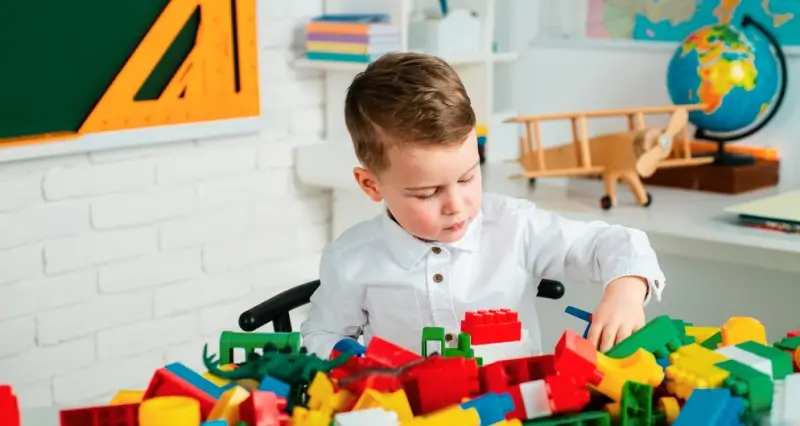
Learning toys support several types of structured yet engaging play that encourage exploration and critical thinking. Each type helps children practice different cognitive and motor skills while keeping the experience enjoyable and interactive.
- Constructive play involves building, assembling, or arranging pieces to create something new. Activities such as stacking blocks, connecting gears, or assembling puzzles strengthen spatial awareness, coordination, and problem-solving.
- Manipulative play focuses on movement and precision. Toys like beads, pegs, or shape sorters require careful control of the hands and fingers, improving fine motor skills and hand-eye coordination.
- Symbolic or representational play uses toys to model ideas or concepts. Alphabet tiles, number cards, and pattern games allow children to experiment with symbols and sequences that build early literacy and numeracy.
- Exploratory play allows children to test ideas and observe results. Science kits, magnetic sets, or sensory materials encourage curiosity and teach basic cause-and-effect reasoning through direct experience.
Together, these types of play promote concentration, logical thinking, and persistence, helping children learn through purposeful action and discovery.
Benefits and Development Focus of Learning Toys
Learning toys contribute to many areas of early development by giving children structured opportunities to think, test, and solve problems. They build the foundation for reasoning, communication, and coordination through guided, hands-on experiences that connect curiosity with understanding.
Cognitive and Problem-Solving Skills
Cognitive development grows when children are challenged to think ahead, make decisions, and find solutions through experience. Learning toys are designed to create these moments by presenting problems that can be solved through trial and observation. When a child completes a puzzle, arranges shapes to fit correctly, or builds a simple pattern, they learn to analyse relationships, plan their next move, and adjust when something doesn’t work. This process teaches reasoning, patience, and logical thinking as they link cause with effect.
A longitudinal study titled,Early Puzzle Play: A predictor of preschoolers’ spatial transformation skill, found that children who played with puzzles at ages around four and a half performed significantly better on spatial tasks involving mental rotation and shape transformation when assessed later. This study shows how simple learning toys like puzzles can foster cognitive skills such as spatial reasoning, memory, and planning. These gains often carry into later abilities, suggesting that early engagement with problem-solving toys builds a foundation for more complex thinking.
Fine Motor Development
Fine motor skills involve the coordination of small muscles in the hands and fingers that allow children to perform precise movements. Learning toys that require picking up, turning, or fitting pieces together help strengthen these muscles while improving control and accuracy. Activities such as threading beads, stacking rings, or using pegboards teach children how to manipulate objects with care and precision. Over time, these experiences support handwriting, self-care tasks, and other skills that depend on steady hand movements.
A 2025 meta-analysis titled, Research progress on the relationship between fine motor skills and academic outcomes in preschool children, found significant positive correlations between preschool children’s fine motor skills and later academic abilities. The study reported that fine motor coordination and visual–motor integration during preschool were associated with better performance in reading and mathematics. This evidence suggests that early, repeated practice with toys requiring precise hand and finger movements can lay a foundation for later academic success and daily life skills.
Language and Communication Skills
Language learning develops through repetition, association, and interaction. Learning toys that focus on letters, words, and storytelling give children meaningful ways to build vocabulary and comprehension. When children match picture cards, use alphabet blocks, or describe what they are creating, they are practicing both receptive and expressive language. These activities support sentence formation, listening, and confidence in communication.
A study titled, The language of play: Developing preschool vocabulary through play following shared book-reading, found that when preschoolers engaged in guided or play-based activities after a shared book reading, they gained more new vocabulary compared with children who only listened to the book without play. This research supports the idea that learning toys and play-based learning can promote oral language development by combining enjoyment and repetition in a social, engaging environment.
Concentration and Persistence
Focus and persistence develop when children are motivated to complete a goal through effort and problem-solving. Learning toys often create this environment by offering tasks that require attention and follow-through, such as completing puzzles, stacking patterns, or building structures with clear outcomes. Each step demands focus, planning, and patience, helping children learn to manage frustration and continue working until they succeed.
Play Toys vs Learning Toys
Each type of toy contributes differently to a child’s growth and development. Their contrasts can be seen in how they are used, what they encourage, and the kind of learning they promote.
The table below summarises the difference between play toys and learning toys, outlining how they vary in purpose, design, and developmental focus.
| Aspect | Play Toys | Learning Toys |
| Purpose | Encourage spontaneous, imaginative, and social play where children explore freely without fixed goals. | Support specific learning outcomes through guided activities that reinforce concepts like counting, problem-solving, and sequencing. |
| Interaction | Children direct the play themselves, creating their own rules, stories, and meanings as they go. | Activities often include instructions or built-in challenges that guide children toward completing a task or learning objective. |
| Learning Approach | Experience-driven and fluid. Children experiment, pretend, and adapt ideas in response to curiosity. | Concept-driven and goal-oriented. Toys are structured to introduce measurable skills and cognitive patterns. |
| Developmental Focus | Strengthens imagination, creativity, emotional understanding, and social cooperation through open expression. | Builds concentration, logic, fine motor coordination, and memory through repetition and structured challenge. |
| Examples | Dolls, blocks, pretend kitchens, toy animals, cars, and outdoor play sets. | Puzzles, alphabet boards, shape sorters, math manipulatives, science kits, and sequencing games. |
| Strengths | Promotes self-expression, collaboration, and flexible thinking while helping children interpret their surroundings. | Encourages focus, persistence, and early mastery of foundational academic and problem-solving skills. |
| Limitations | May not develop specific academic or cognitive targets without added guidance. | Can restrict creative freedom if activities are overly instructional or repetitive. |
Balance Fun and Educational Value
Finding balance between fun and educational begins with understanding the difference between play toys and learning toys. Open-ended play gives them space to express ideas, experiment with choices, and explore the world at their own pace. Structured play through learning toys adds purpose and focus, helping them apply reasoning, coordination, and concentration. The value lies not in choosing between the two, but in allowing both to coexist naturally.
Children gain more when their play environment encourages variety. Mixing storytelling, construction, and problem-solving toys allows them to shift between creativity and focus, curiosity and persistence. This balance keeps playtime engaging and developmentally rich, giving children opportunities to think independently while still practicing specific skills.
The Impact of Play on Future Success
Early play experiences influence how children approach challenges, relationships, and learning throughout life. Activities that involve imagination, planning, and cooperation help build qualities like resilience, empathy, and self-regulation. These abilities support emotional maturity and confidence, which carry into academic and social success later on.
Learning toys add another dimension by strengthening memory, sequencing, and logic. Play toys, in turn, cultivate curiosity, adaptability, and creative expression. When children are exposed to both, they learn to connect thought with action, understanding with imagination. This balance shapes well-rounded growth, preparing them not only for school but for the many kinds of learning that happen beyond it.
Play, Learn, and Grow with Let’s Learn Kidz
Toys are powerful tools for discovery and creativity. A balanced mix of play and learning helps children build confidence, curiosity, and a love for exploration. Through both imaginative play and skill-focused activities, they develop the awareness, coordination, and problem-solving abilities that form the basis for lifelong learning.
At Let’s Learn Kidz, we value the connection between joyful play and meaningful growth. Our range reflects the difference between play toys and learning toys, offering both open-ended and educational options to support balanced development. We encourage parents to observe what naturally captures their child’s attention and to offer a variety of play experiences that support cognitive, social, and emotional growth in equal measure.



0 Comments