

Choosing educational play toys for kids can feel overwhelming. With so many options claiming to support learning and development, it is not always clear what actually makes a toy valuable.
The truth is simple: the best educational play toys are toys that match a child’s age, spark curiosity and encourage meaningful play. When children are engaged and enjoying themselves, real learning happens naturally.
Table of Contents
Start with your child’s developmental stage
Age-appropriate toys are the foundation of good learning through play.
Every stage of childhood brings new physical, emotional and cognitive milestones. A toy should meet a child where they are developmentally — not where we think they should be.
Early childhood specialists at Zero to Three emphasise that play is one of the most important ways young children build brain connections, emotional security and problem-solving skills. When toys align with a child’s developmental stage, they actively support this growth rather than frustrate it.
• Toddlers benefit from sensory toys, stacking blocks and simple cause-and-effect toys.
• Preschoolers thrive with imaginative role-play toys, building sets and early problem-solving games.
• Primary school children are ready for more structured games, complex construction sets and introductory STEM challenges.
• Older children enjoy strategy games, coding toys, robotics kits and advanced building systems.
When a toy aligns with a child’s stage, it builds confidence. When it is too advanced, frustration follows. When it is too simple, boredom sets in.
The right level creates growth.
Look for toys that encourage creative play
Creative play is one of the strongest indicators of a good educational toy.Toys that allow children to invent, imagine and experiment help develop:
• Language and communication skills
• Emotional intelligence
• Social confidence
• Independent thinking
Creative play toys include:
• Dolls and doll houses
• Farm sets and model animals
• Building bricks and magnetic tiles
• Open-ended construction sets
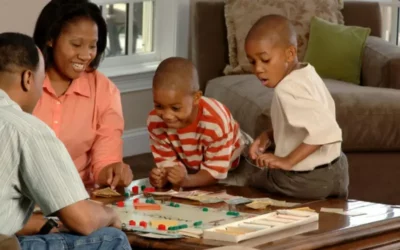
• Board games and puzzles
• Story-based interactive books
Open-ended toys are particularly powerful because they can be used in multiple ways. The more a child can do with a toy, the longer it supports learning.
Consider how the toy builds real skills
A toy does not need flashing lights or complicated technology to be educational.
• Does this toy encourage problem-solving?
• Does it strengthen fine motor skills?
• Does it require cooperation or communication?
• Does it promote logical thinking?
Even simple toys — such as a cricket set, a puzzle or a set of building blocks — can support physical, mental and emotional development. The best educational play toys build more than one skill at a time.
The role of STEM toys
STEM toys (Science, Technology, Engineering and Mathematics) are increasingly popular — and for good reason.
STEM play toys encourage:
• Logical thinking
• Pattern recognition
• Cause-and-effect understanding
• Basic maths concepts
• Early engineering skills
They include:
• Building bricks and construction systems
• Magnetic building tiles
• Coding games
• Beginner robotics kits
• Logic puzzles
Introducing STEM toys early helps children develop confidence with numbers, sequencing and problem-solving in a playful way. STEM does not need to be complicated. Many traditional building and construction toys naturally support STEM learning.
Always prioritise safety and quality
Educational value means little if a toy is unsafe. When choosing educational play toys, look for:
• Non-toxic materials
• Durable construction
• Rounded edges
• Age-appropriate sizing
• Easy cleaning and maintenance
Quality toys tend to last longer and can often be shared between siblings, making them better long-term investments.
The simplest test: are they engaged?
The best way to choose educational play toys is to observe your child. If they are:
• Focused
• Curious
• Repeating play independently
• Exploring new ideas
• Playing happily with others
They are learning.
If they quickly lose interest, the toy may not match their developmental stage or interests.
Enjoyment and engagement are the strongest signs that a toy is working.
Choosing educational play toys for kids of all ages doesn’t require expert knowledge — just thoughtful consideration and an understanding of your child’s interests and stage of development. The best toys are those that match their age, spark creativity, build meaningful skills and, most importantly, feel fun rather than forced.
When children play with curiosity and genuine enjoyment, they are developing confidence, problem-solving abilities and a lifelong love of learning. That balance of joy and growth is what truly makes a toy educational.



0 Comments