

The benefits of building blocks go far beyond simple play. These timeless toys help children develop cognitive skills, creativity, coordination, and early problem-solving abilities.
Building blocks have been a staple in children’s playrooms for generations, and their enduring popularity is no accident. These simple yet versatile toys provide far more than entertainment. Building blocks encourage children to explore ideas, experiment with structures, and develop a wide range of important skills through hands-on play.
Because block play is open-ended, children can approach it in many different ways. Some may focus on building tall towers, while others create houses, vehicles, or imaginative structures. Through this process, children naturally develop problem-solving abilities, creativity, and confidence.
Table of Contents
Cognitive benefits of building blocks
One of the most important benefits of building blocks is their ability to support cognitive development. When children stack blocks and experiment with different structures, they naturally begin to explore concepts such as balance, gravity, and stability.
Children quickly learn that certain designs work better than others. If a tower falls, they must think about how to rebuild it more effectively. This process encourages logical thinking, spatial awareness, and problem solving skills.
These early experiences help develop critical thinking abilities that will later support learning in subjects such as mathematics, science, and engineering.
Motor skill benefits of building blocks
Another key benefit of building blocks is the development of fine motor skills and hand-eye coordination. As children grasp, stack, rotate, and position blocks, they strengthen the small muscles in their hands and fingers.
These movements require precision and coordination. Over time, repeated block play helps children gain better control of their hand movements, which supports everyday activities such as writing, drawing, and using tools.
Developing these motor skills during early childhood helps lay the foundation for many important tasks children will encounter later in life.
Social and language benefits of building blocks
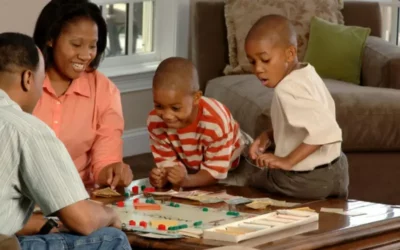
Playing with building blocks also supports social and language development. When children build together, they learn how to share materials, communicate ideas, and collaborate on creative projects.
Parents and educators can enhance these interactions by asking children questions about what they are building. Simple conversations about shapes, colours, and structures help expand vocabulary and encourage children to explain their ideas.
These social interactions make block play an excellent opportunity for developing communication skills while also strengthening relationships between children.
Creative benefits of building blocks
The open-ended nature of block play makes it a powerful tool for encouraging creativity. Unlike toys with fixed instructions or outcomes, building blocks allow children to create anything they imagine.
A simple collection of blocks can become a castle, a city, a vehicle, or an entirely imaginary world. This freedom to experiment encourages children to think creatively and express their ideas through play.
One of the greatest benefits of building blocks is that there are no limits to what children can create, allowing them to explore their imagination and develop innovative thinking skills.
Educational benefits of building blocks
Building blocks also introduce children to early mathematical and scientific concepts. As children count blocks, sort them by colour or shape, or compare the height of their structures, they begin to understand basic ideas related to numbers, patterns, and measurement.
Block play also demonstrates simple scientific principles such as gravity, balance, and structural stability. These hands-on experiences help children understand complex ideas in a natural and engaging way.
Because of these learning opportunities, many educators recognise the educational benefits of building blocks as an important part of early childhood development.
Emotional benefits of building blocks
Another important benefit of building blocks is the development of patience and resilience. Building structures often involves trial and error. Towers may fall, bridges may collapse, and designs may need to be rebuilt multiple times.
Instead of becoming discouraged, children learn that mistakes are part of the learning process. Each attempt teaches them something new and encourages them to try again.
Through this process, children develop perseverance and confidence in their ability to overcome challenges.
Why the benefits of building blocks remain timeless
Despite the wide variety of modern toys available today, the benefits of building blocks remain as valuable as ever. Their simplicity allows children to explore, experiment, and learn at their own pace.
At Let’s Learn Kidz, we recognise the importance of open-ended play and offer a curated selection of high-quality building blocks designed to support creativity, exploration, and learning. By encouraging children to build, imagine, and experiment, these toys help lay the foundation for lifelong curiosity and discovery.
Choosing the right building blocks for your child
When selecting building blocks for children, it helps to consider their age, safety, and ease of use. Younger children often benefit from larger, lightweight blocks that are easy to grasp, stack, and move. Blocks that are durable and made from non-toxic materials are also important, especially for toddlers who may still explore toys by putting them in their mouths.
It is also helpful to choose blocks that encourage hands-on exploration and creativity. Simple blocks without complicated instructions allow children to experiment freely, building towers, houses, or imaginative structures. This open-ended style of play supports problem-solving and helps children learn through trial and error.
Different types of blocks can offer slightly different play experiences. Wooden blocks, foam blocks, magnetic tiles, and interlocking plastic blocks each encourage creativity while helping children develop coordination, spatial awareness, and early building skills. The most effective building blocks are those that are safe, durable, and enjoyable for children to explore again and again.

Frequently asked questions about the benefits of building blocks
What are the main benefits of building blocks for children?
The benefits of building blocks include improved problem-solving skills, stronger fine motor development, increased creativity, and better spatial awareness. Through hands-on play, children learn how structures work while developing important cognitive skills.
At what age can children start playing with building blocks?
Many children can begin exploring large building blocks as early as one year old. As children grow older, they can move on to more complex building sets that allow them to create larger and more detailed structures.
How do building blocks support learning through play?
Building blocks encourage children to experiment, explore ideas, and solve problems independently. Through stacking, sorting, and building, children naturally learn about balance, patterns, shapes, and measurement.
Do building blocks help with STEM learning?
Yes. One of the key benefits of building blocks is that they introduce children to early STEM concepts such as engineering, physics, and mathematics through hands-on exploration.
How can parents encourage children to play with building blocks?
Parents can encourage block play by creating a safe and open play environment, asking children about their creations, and participating in building activities together. This support helps children gain the full developmental benefits of building blocks.
Why do children learn so effectively through building blocks
Children learn particularly well through hands-on exploration and creative play. Activities such as building with blocks allow children to test ideas, experiment with structures, and develop problem-solving skills in a natural way. Research from the Harvard Graduate School of Education highlights how play-based learning supports cognitive development, creativity, and critical thinking in young learners.
How building block play develops at different ages
Children engage with building blocks differently as they grow. Understanding these stages can help parents choose blocks that match their child’s abilities and interests.
Toddlers (1–3 years)
At this stage, children usually begin by stacking a few blocks and knocking them down again. This simple activity helps develop hand-eye coordination, fine motor control, and an early understanding of cause and effect.
Preschoolers (3–5 years)
As children grow, their structures become more intentional. Preschoolers start building towers, bridges, and simple houses. They also begin experimenting with balance, shape, and height while using blocks in imaginative play scenarios.
Early school age (5+ years)
Older children often create more complex structures and may combine block play with storytelling and problem-solving. They begin planning their builds, experimenting with patterns and symmetry, and working collaboratively with other children.




This is a great read! Building blocks really are such a timeless and versatile tool for early childhood development. We especially appreciated the point about how they encourage creativity and collaboration—so important in today’s screen-filled world. Thanks for highlighting the deeper cognitive and emotional benefits of something so simple yet powerful!
— Kidsomia