

Doll play often looks simple on the surface. A child feeds a doll, tucks it into bed, or talks to it as if it were real. From a brain development perspective, these moments involve a wide range of neural processes working together. During early childhood, the brain builds connections rapidly, and play provides one of the main ways those connections form and strengthen.
Doll play sits at the intersection of imagination, memory, emotion, and social understanding. Children work through everyday experiences using their own language, movement, and emotional responses. Familiar roles and scenarios create a stable framework where ideas can be revisited, adjusted, and expanded over time. This makes doll play a meaningful part of early childhood, offering insight into how children learn, relate, and interpret the world around them.
Table of Contents
What Is Doll Play?
Doll play is a form of play where a child uses a doll to represent a real person and builds interaction around that relationship. The doll becomes a stand in for someone familiar, such as a parent, sibling, caregiver, or even the child themselves. Through this, children recreate parts of daily life, explore social roles, and rehearse interactions they see or experience regularly.
What makes doll play distinct is its flexibility. There is no fixed script, rule set, or outcome. A single doll can shift roles repeatedly, moving from baby to friend to patient to teacher depending on what the child is processing at that moment. This makes doll play especially useful during early childhood, when understanding of the world is still forming through observation and repetition.
Doll Play vs Pretend Play
Pretend play is a broad category that includes any play where a child imagines scenarios beyond what is physically present. Doll play sits within this category but has a specific focus. The doll represents a person, which naturally brings social interaction, emotion, and communication into the play. While pretending with cars, animals, or fantasy characters can involve storytelling, doll play usually mirrors real relationships and daily routines, such as caregiving, conversation, or shared activities.
Doll Play vs Educational Toys
Educational toys are often designed with a specific purpose in mind, such as counting, matching, sequencing, or problem solving. These toys usually guide children toward completing a task or reaching a defined outcome. Doll play functions differently. It has no fixed goal and no expected result, which allows children to move freely between imagination, memory, language, and emotional expression during play.
With dolls, the direction of play comes from the child. Play may shift from caregiving to conversation to storytelling within a single session. This open format often supports sustained engagement and spontaneous language use, as children are not working toward completion or correction. Doll play sits alongside educational toys by offering space for exploration, reflection, and personal expression within everyday play experiences.
Benefits of Doll Play
Doll play supports early development by allowing children to practice real world interactions in a safe and familiar setting. Through repeated play, children explore how people relate to one another, how emotions are expressed, and how situations change based on actions and responses.
As children grow, doll play naturally becomes more complex. Simple actions such as holding or feeding a doll gradually develop into extended conversations, role switching, and layered storytelling. This progression reflects growth in language, memory, emotional awareness, and social understanding, all without the need for instruction or correction.
| Age Range | Typical Doll Play Behaviours | Areas of Development Supported |
| 12 to 24 months | Carrying dolls, holding them close, simple care actions such as feeding or rocking, brief moments of pretend play that closely mirror real caregiving experiences | Early emotional recognition through familiar actions, attachment related behaviours, imitation of observed routines, and coordination between sensory input and motor response |
| 2 to 3 years | Repeating familiar routines such as feeding or putting a doll to sleep, directing short phrases or sounds toward the doll, returning to the same play sequence many times during a session | Early language use through self directed speech, memory consolidation through repetition, emotional processing of familiar experiences, and a growing sense of predictability and control during play |
| 3 to 4 years | Assigning roles to dolls, combining actions into short sequences, engaging in simple conversations, beginning to involve multiple dolls within the same scenario | Social understanding through role awareness, sequencing of events, symbolic thinking, and early perspective taking during imagined interactions |
| 4 to 5 years | Extended role play with detailed dialogue, switching roles between dolls, adapting stories as play unfolds, introducing new outcomes into familiar scenarios | Narrative thinking, emotional regulation through flexible role shifts, planning and organisation of ideas, and deeper understanding of relationships and social dynamics |
Doll Play and the Developing Brain
Early childhood is a period when the brain is actively building and refining connections based on experience. These connections shape how children think, communicate, and respond to the world around them. Play is one of the main ways the brain gathers this experience, especially when play reflects real life and carries emotional meaning.
How Neural Connections Form in Early Childhood
The brain is made up of nerve cells called neurons. Neurons communicate with each other through connections that form when signals travel repeatedly along the same pathways. Each time an experience is repeated, the connection involved becomes easier for the brain to access. Over time, frequently used connections strengthen, while unused ones fade.
In early childhood, the brain is especially responsive to this process. Experiences that involve action, emotion, and attention at the same time tend to form stronger connections. When a child hears language, moves their body, recalls a memory, and feels an emotion in one moment, the brain links those systems together rather than treating them as separate skills.
Language is no longer just words. Movement is no longer just action. Emotion is no longer just feeling. The brain learns how these things work together in real situations.
In practical terms, this leads to a child who can:
- Connect words to actions and emotions
- Respond to social situations with appropriate behaviour
- Recall past experiences and use them to guide current choices
- Adapt behaviour based on how others respond
Instead of learning skills in isolation, the brain builds networks that support everyday functioning. This is what allows a child to talk while acting, regulate emotion during interaction, and understand cause and effect in social contexts.
Why Doll Play Engages Multiple Brain Systems
Doll play places the brain under a specific kind of cognitive demand. Physical movement is involved when a child holds, carries, or positions a doll. Language systems activate when the child speaks to the doll or narrates what is happening. Memory comes into play when the child recreates familiar routines or conversations. Emotional processing is involved when the child expresses care, frustration, or comfort through the doll.
The child is not completing a task with a clear start and finish. Instead, the brain must manage several processes at once while responding to an unfolding situation. The child decides what happens next, adjusts language and actions as the scenario changes, and responds to imagined reactions from the doll.
This requires ongoing prediction and adjustment. The brain anticipates responses, revises actions, and keeps the play coherent in real time. These demands resemble real social interaction, where behaviour, speech, and emotional awareness must stay coordinated without pauses or prompts. Doll play gives the brain repeated practice handling this kind of load in a low pressure setting.
Over time, this strengthens the brain’s ability to stay organised during complex situations. Rather than switching between skills, the brain learns to manage them simultaneously, which supports smoother interaction, communication, and emotional control in everyday life.
The Role of Repetition and Familiarity in Doll Play
Children often repeat the same doll play scenes many times. This repetition is not random and it does not signal a lack of imagination. Familiar scenes give the brain a stable structure to work within. When the overall situation feels known, attention can shift away from figuring out what happens next and toward refining details within the play.
A common example is bedtime play. A child may put a doll to bed in the same way each day, changing clothes, lying the doll down, and saying goodnight. At first, the sequence stays almost identical. Over time, small changes tend to appear. The child may add dialogue, introduce comfort after an imagined upset, or adjust the order of actions. These changes show the brain testing variations while keeping the larger pattern intact.
This balance between repetition and variation allows learning to happen without overload. Familiarity reduces effort, while small adjustments create space for language, emotional processing, and social understanding to develop. What appears repetitive on the surface is often the brain strengthening organisation and confidence through controlled exploration.
Why Doll Play Is Unique in Early Childhood
Doll play holds a particular place in early childhood because it centers on people, relationships, and interaction rather than objects or outcomes. When children play with dolls, they are often drawing on real experiences and familiar roles, using play to explore how situations unfold and how responses change within them. This also creates space for independent play, as children can guide their own stories, make decisions, and work through ideas without needing direction. This makes doll play a distinct form of play during early childhood, as it brings together emotion, communication, movement, and decision making within everyday scenarios children recognise.
Emotional Experience Anchored in Familiar Roles
Emotional development refers to how children begin to recognise, understand, and manage feelings in themselves and others. In early childhood, emotions are often experienced physically and situationally rather than explained with words. Children feel emotions first and make sense of them later. Emotional development is the gradual process of linking those feelings to meaning, context, and response.
This process matters because emotional understanding underpins how children relate to others and respond to everyday situations. When children can begin to recognise emotions and connect them to experiences, they are better able to cope with frustration, seek comfort, and respond appropriately during interaction. Emotional development also supports confidence and a sense of security, which influences how children engage with learning and relationships.
As research suggests, doll play supports emotional development by placing feelings inside familiar roles and situations. A doll often represents someone the child knows, such as a caregiver, sibling, or the child themselves. Through play, a child may comfort a doll, express frustration toward it, or repeat caregiving routines they experience daily. For example, a child may comfort a doll that is “crying” or repeat calming routines they experience themselves, such as holding the doll close or speaking softly to it. This allows emotions to be explored safely and repeatedly, helping children connect feelings to actions and responses over time.
Social Interaction Without External Direction
Social development involves learning how to engage with others, respond to cues, and take part in exchanges that require attention, timing, and adjustment. During early childhood, this understanding forms through participation rather than explanation. Children learn how interaction works by being involved in it, often before they can describe social rules or expectations.
Everyday interaction rarely follows a fixed pattern. Conversations and shared activities require children to notice signals, wait for a response, and adapt their behaviour as situations change. Early opportunities to practice these skills influence how confidently children participate in group settings and how comfortably they respond when interaction does not go as expected.
Doll play creates space for this kind of practice without outside direction. Children control the pace and structure of the exchange, deciding when to speak, pause, or respond. For example, a child may talk to a doll, wait as if listening, and then continue the interaction based on what they imagine the doll needs. These self guided exchanges allow children to rehearse timing, response, and adjustment in a familiar context, supporting social understanding through repeated use.
Language Used for Meaning, Not Instruction
Language development in early childhood grows through use in real situations rather than through repetition of isolated words or phrases. Children learn how language works by connecting words to people, actions, and outcomes they recognise. Meaning comes first, and structure follows as children experiment with how language fits into interaction.
Language matters because it supports communication, understanding, and shared experience. When children use language to express needs, describe situations, or respond to others, they begin to see words as tools rather than labels. This supports clearer expression and helps children stay engaged during interaction, even when situations change.
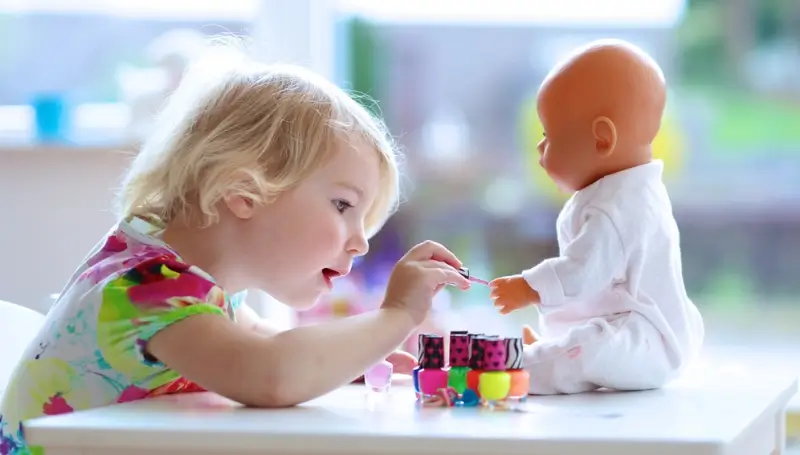
Doll play encourages this type of language use by placing words inside ongoing situations. Children talk to dolls to explain what is happening, express feelings, or move a story forward. For example, a child may describe what a doll is doing, speak for different characters, or repeat phrases they hear in daily life. Language develops through purpose and context, allowing children to practice communication that feels relevant and connected to experience.
Movement Linked to Intention and Care
Movement in early childhood often carries meaning when actions are connected to purpose. Children move in response to situations, routines, and relationships around them. These actions are shaped by intention, such as caring for someone or responding to what is happening during play.
Purposeful movement supports coordination, planning, and awareness of others. Actions connected to care or response require children to adjust their movements, control their pace, and consider how their actions affect someone else. Over time, these experiences help children develop body awareness that aligns with social situations.
Doll play connects movement to intention through everyday caregiving routines. Children lift, hold, dress, or position dolls in ways that reflect familiar experiences. For example, a child may carefully place a doll down to sleep or adjust its position while pretending to feed it. These actions link physical movement with social meaning, helping children coordinate movement with understanding and care.
Problem Solving Within Open Play
Problem solving in early childhood develops through situations that require decision making without clear instructions. Children learn how to approach challenges by assessing what is happening, considering possible actions, and choosing how to respond. These early problem solving experiences are often informal and embedded in play rather than presented as tasks to complete.
Problem solving plays a role in how children approach situations that feel uncertain or unfamiliar. In daily life, children often need to decide what to do next without clear guidance, adjust their plans when something changes, and persist when an outcome is not immediate. Experiences that allow children to work through these moments support confidence and flexibility as they learn how to respond to challenges over time.
Doll play supports problem solving by placing children in open ended scenarios that evolve through their own choices. Situations arise naturally within play, such as a doll needing comfort, care, or a change in routine. A child decides how to respond, tries one approach, and may revise it as the play continues. For example, a child may adjust the story, introduce a new action, or change roles to address what is happening. These moments allow children to practice decision making and adjustment within a familiar and meaningful context.
Flexible Thinking and Adaptation
Flexible thinking involves the ability to revise ideas while staying engaged with a situation. In early childhood, this shows up as adjusting roles, expectations, or sequences without needing to start over. Rather than abandoning a plan, children learn how to reshape it so the play can continue.
This ability supports how children handle disruption and change. When plans shift or outcomes differ from expectation, children who can revise ideas are better able to stay regulated and engaged. Adaptation helps children remain involved in interaction instead of becoming frustrated or stuck when something does not unfold as expected.
Doll play supports this by allowing children to revise the rules of play in real time. A story may change direction, a role may be reassigned, or a problem may require a different response than originally planned. For example, a child may decide that a doll who was meant to sleep now needs comfort or that a caregiver role should switch. These revisions allow children to practice adjusting expectations while maintaining continuity, helping flexibility develop through experience rather than instruction.
Cause and Effect Through Play Decisions
Early cause and effect learning takes shape when children notice how their actions change a situation. During play, outcomes are experienced immediately and within context. Actions are followed by responses, which allows children to observe patterns without explanation or instruction.
Everyday interaction relies on this kind of pattern recognition. Children begin to anticipate what may happen next based on previous experience, adjusting behaviour accordingly. Over time, this strengthens a sense of agency, where actions feel connected to outcomes rather than random or disconnected.
Within doll play, these connections are explored through story and interaction. A child may notice that gentle behaviour leads to calm or that a change in routine alters the direction of the play. For example, comforting a doll may shift the mood of the scene, while ignoring it may extend distress. These moments allow children to experience consequences in a safe, repeatable way, helping cause and effect understanding develop through direct involvement.
How Doll Play Changes as Children Grow
Doll play often remains part of early childhood for several years, but the way children engage with it becomes more layered over time. These shifts reflect growing understanding, not a move away from play itself. The same dolls support different kinds of thinking as children gain experience.
- Play moves from repeating familiar routines to adjusting scenarios in response to what unfolds, showing greater comfort with change and uncertainty.
- Dialogue becomes more intentional, with children using language to guide interaction, express emotion, and shape outcomes rather than simply narrating actions.
- Roles are held more flexibly, allowing children to move between perspectives and explore how different responses influence the direction of play.
- Stories extend across longer periods, with children maintaining continuity while revising details as new ideas emerge.
- Decisions within play show clearer planning, as children begin anticipating outcomes and modifying actions based on previous experiences.
These changes highlight how doll play adapts alongside development. Rather than being outgrown, it becomes a space where children test ideas, refine understanding, and apply what they have learned in increasingly thoughtful ways.
Shop Dolls at Let’s Learn Kidz
At Let’s Learn Kidz, we treat doll play as part of everyday learning rather than a separate activity. Dolls are selected to fit naturally into daily routines at home and in early learning environments, where play often blends into real life moments. This approach allows children to move between play and experience without clear boundaries.
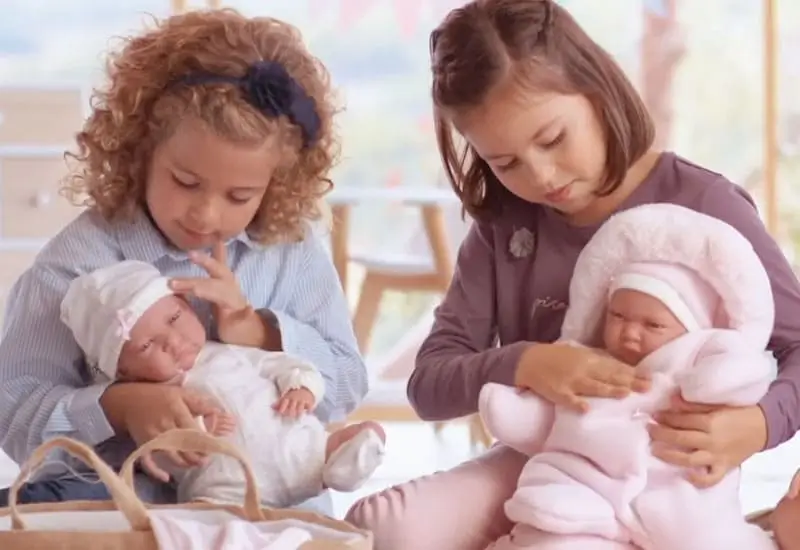
The focus is on dolls that can be used repeatedly across different stages of early childhood. Rather than being tied to a single story or theme, dolls in the Let’s Learn Kidz range, such as Llorens Dolls, are chosen for their ability to support varied use over time. Children can return to the same doll as their understanding grows, using it in new ways without needing explanation or guidance.
Attention is also given to how dolls feel and function during play. Features such as size, flexibility, and simplicity affect how children interact with dolls during routines like holding, dressing, or caregiving play. These considerations help support sustained engagement and allow play to unfold at the child’s pace.
Through this approach, we aim to support doll play that integrates naturally into daily life. Dolls are positioned as familiar companions within play, offering continuity as children explore relationships, routines, and interaction through their own experiences.
Frequently Asked Questions
What are the benefits of doll play?
Doll play supports several areas of early childhood development at the same time. Children use dolls to explore everyday situations, relationships, and routines they recognise. Through play, children practice communication, emotional expression, decision making, and social interaction in a familiar context. Doll play also supports sustained attention, as children often return to the same dolls and scenarios over long periods.
What is the psychology behind playing with dolls?
From a psychological perspective, doll play allows children to represent people and relationships symbolically. Dolls act as stand ins for real individuals, which gives children a way to replay experiences, test responses, and explore emotions safely. This type of play helps children organise understanding around social interaction, caregiving, and daily life, especially before they are able to explain these ideas verbally.
Is it good for kids to play with dolls?
Doll play is widely considered a positive form of play during early childhood. It provides children with space to explore feelings, communication, and interaction at their own pace. Doll play does not rely on instruction or performance, which allows children to engage freely and revisit play as their understanding grows.
What is the spiritual significance of dolls?
In some cultural and spiritual traditions, dolls have been used symbolically to represent protection, storytelling, or connection to ancestry. In early childhood play, however, dolls are typically used as tools for representation rather than spiritual objects. Children engage with dolls based on familiarity and imagination rather than spiritual meaning, using them to reflect daily experiences and relationships.
What age is best to introduce dolls for development?
Dolls can be introduced during the toddler years, often around 12 to 18 months, when children begin to imitate familiar actions such as holding, feeding, or caring. At this stage, dolls support imitation and early emotional recognition. As children grow, the same dolls can support more complex play without needing to change the toy itself.
Can dolls really be educational?
Dolls can support learning when education is understood as exploration rather than instruction. Through doll play, children develop language through dialogue, emotional understanding through caregiving scenarios, and problem solving through open ended situations. These forms of learning happen through use and repetition rather than structured tasks.
At what age do children typically start playing with dolls?
Many children begin engaging with dolls during the second year of life. Early play often involves simple actions such as carrying or holding. As children approach preschool age, doll play usually becomes more detailed, including role play, dialogue, and storytelling. The timeline varies, and interest in doll play may come and go.
Is doll play important for both boys and girls?
Doll play supports skills that are relevant for all children, including communication, emotional awareness, and social understanding. These skills are not gender specific. Children of any gender may engage with doll play in different ways, depending on personality, environment, and interests.
Are simple dolls better than detailed dolls for early childhood play?
Simple dolls often allow for greater flexibility during play. When a doll does not dictate a specific story or role, children can project their own experiences and ideas onto play. Detailed dolls can still be engaging, but simpler designs often support longer use over time, as they adapt more easily to changing stages of play and understanding.
How to choose the right dolls for doll play
The best dolls for doll play are not necessarily the most expensive ones. Instead, choose dolls that are appropriate for the child’s age, easy to handle, and enjoyable to play with.
When selecting dolls for young children, it helps to look for features that make play simple and practical. Lightweight dolls are easier for toddlers to carry, while dolls that can be dressed or undressed encourage hands-on interaction during play.
You may also want to consider:
- Dolls that the child finds appealing and engaging
- Lightweight dolls that are easy for small children to carry
- Dolls that are easy for parents and caregivers to keep clean
- Dolls with clothing or simple accessories that support interactive play
- Dolls made from safe, non-toxic materials with no small removable parts
Choosing dolls that are safe, durable, and easy for children to handle helps ensure that doll play remains enjoyable and suitable for everyday play.



0 Comments