
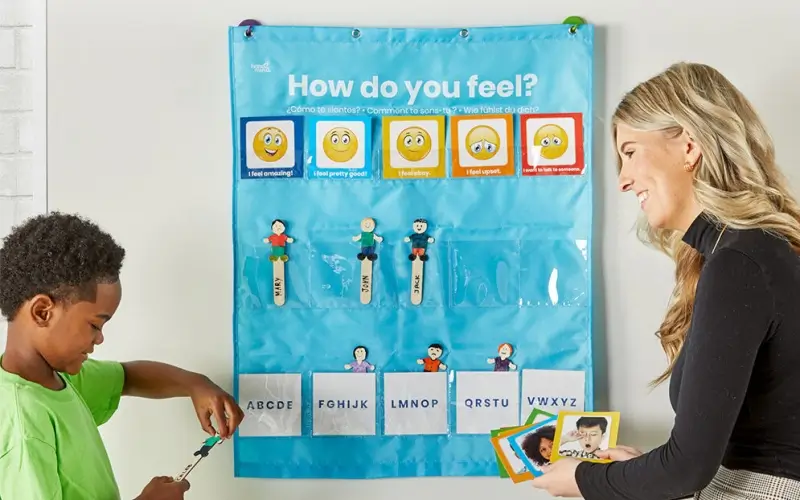
From the simple wooden blocks of decades past to today’s interactive robotics kits and coding games, the evolution of educational toys reflects how our understanding of childhood development has grown. Across generations, these toys have nurtured curiosity, strengthened essential skills, and supported learning in ways that feel natural and joyful.
Educational toys have never been just about entertainment. They have always served a deeper purpose, shaping young minds through purposeful play.
Table of Contents
A journey through generations
The earliest educational toys were beautifully simple. Wooden alphabet blocks, shape sorters, puzzles, and construction sets encouraged children to explore patterns, letters, and problem-solving through hands-on interaction. Historical archives from the Strong National Museum of Play show how many of these classic toys laid the foundation for modern learning tools.
These timeless tools introduced foundational concepts such as:
- Early literacy
- Numeracy
- Spatial awareness
- Logical thinking
As society evolved, so did educational toys. Each generation introduced new materials, ideas, and innovations and yet the core principle remained unchanged: children learn best through play.
Why educational toys have stood the test of time
Educational toys have remained a staple in childhood because they blend fun with meaningful development. They allow children to experiment, make mistakes, and discover solutions independently.
Through learning through play, children naturally develop:
- Critical thinking skills
- Fine motor coordination
- Creativity and imagination
- Concentration and persistence
Unlike passive forms of entertainment, educational toys encourage active engagement. They invite children to build, sort, match, create, and question. All essential skills for lifelong learning.
The science behind learning through play
Modern research continues to confirm what generations of parents instinctively understood: play is a powerful learning tool.
When children interact with puzzles, building sets, or hands-on learning games, they stimulate multiple areas of the brain at once. This supports:
Cognitive development
Problem-solving tasks strengthen memory, attention span, and reasoning abilities.
Language and communication
Board games, interactive books, and storytelling toys introduce new vocabulary and encourage expressive language.
Social skills
Group play fosters cooperation, sharing, and teamwork — helping children build healthy relationships.
Emotional growth
Role-play and imaginative scenarios help children explore empathy, manage emotions, and understand different perspectives.
Educational toys work because they combine movement, thought, and imagination into one integrated experience.
Educational toys in the digital age
The digital era has transformed the educational toy landscape. Interactive tablets, coding kits, robotics sets, and augmented reality games now complement traditional hands-on toys.
Rather than replacing classic play, technology has expanded its possibilities.
Today’s tech-integrated educational toys:
- Introduce programming logic
- Encourage design thinking
- Blend physical and digital problem-solving
- Adapt to a child’s learning pace
The evolution of educational toys shows how innovation can enhance, rather than replace, foundational play principles.
Preparing children for the future with STEM toys
In a rapidly changing world, STEM (Science, Technology, Engineering and Mathematics) skills are increasingly valuable. Modern educational toys often incorporate STEM principles in accessible, engaging ways.
Through experimentation and exploration, children develop:
- Analytical thinking
- Creativity in problem-solving
- Engineering awareness
- Curiosity about how things work
Early exposure to STEM concepts builds confidence and opens pathways to future learning opportunities.
Why educational toys still matter today
The evolution of educational toys is not simply a story of changing materials or advancing technology. It reflects our growing understanding of how children develop, adapt, and thrive.
While designs may modernise and features may become more sophisticated, the purpose remains constant: to support curiosity, build confidence, and nurture lifelong learners.
Educational toys will continue to evolve — but their impact on childhood development will always endure.
At Let’s Learn Kidz, we’re proud to offer thoughtfully selected educational toys that inspire creativity, strengthen skills, and support every stage of your child’s learning journey.

Frequently asked questions
What is the evolution of educational toys?
The evolution of educational toys refers to how learning toys have changed over time, from simple wooden blocks, sorting shapes and puzzles to modern STEM kits, coding games, and interactive technology. While materials and features have advanced, the purpose has remained the same. Supporting children’s development through play.
Why is the evolution of educational toys important?
The evolution of educational toys reflects our growing understanding of how children learn best. As research into child development has expanded, educational toys have adapted to better support cognitive skills, creativity, and problem-solving abilities.
How has the evolution of educational toys influenced modern learning?
The evolution of educational toys has influenced modern learning by integrating technology, STEM principles, and interactive design. Today’s toys combine traditional hands-on play with digital innovation, helping children build skills relevant to the future.
What can parents learn from the evolution of educational toys?
By understanding the evolution of educational toys, parents can appreciate how different types of play support development. This knowledge helps them choose toys that balance creativity, critical thinking, and hands-on exploration.




0 Comments