

Baby walkers are a popular product many parents consider when their baby begins to show interest in standing and moving. As a new parent, you may wonder whether a baby walker is the right choice for your child.
For many parents, watching their baby take their first steps is one of the most exciting milestones of early childhood. Along the way, you may come across a variety of products designed to help babies develop their mobility, one of the most common being a baby walker.
If you’re considering purchasing one, it’s helpful to understand both the advantages and the potential drawbacks. Like many baby products, they certainly can offer benefits when used correctly, but they also require careful supervision and thoughtful consideration before deciding whether they are the right choice for your family.
Table of Contents
Understanding baby walkers
Baby walkers are designed to allow babies to move around while supported by a frame with wheels. These products typically include a seat that holds the baby upright while their feet touch the floor, allowing them to push themselves forward.
For many parents, baby walkers seem like an appealing way to encourage movement and exploration. However, child development experts often recommend using them with caution, as babies develop mobility skills naturally through crawling, pulling themselves up, and eventually walking independently.
The potential benefits of baby walkers
When used carefully and under supervision, they can offer a few advantages for both babies and parents.
Encouraging movement and exploration
Baby walkers allow babies to move around more independently, giving them the opportunity to explore their surroundings and interact with their environment in new ways.
Developing motor skills
Using a walker may help babies strengthen certain leg muscles and improve coordination as they practice pushing themselves forward and shifting their weight.
Providing entertainment and engagement
Many of these walkers include built-in activity trays with toys, colours, and sounds designed to keep babies entertained while they play.
The potential drawbacks
Despite their popularity, baby walkers have raised concerns among many child development professionals due to potential safety risks and developmental considerations.
Safety concerns
One of the main risks associated with baby walkers is that they allow babies to move quickly and reach areas that may not normally be accessible. This can increase the risk of accidents involving stairs, furniture, or other household hazards.
Because of this, constant supervision is essential whenever a baby walker is in use.
Possible delays in natural walking development
Some experts believe that relying too heavily on walkers may slow the development of natural walking skills. Babies typically learn to walk through a series of stages including crawling, pulling themselves up, and cruising along furniture. Walkers can sometimes reduce opportunities for babies to practice these natural movements.
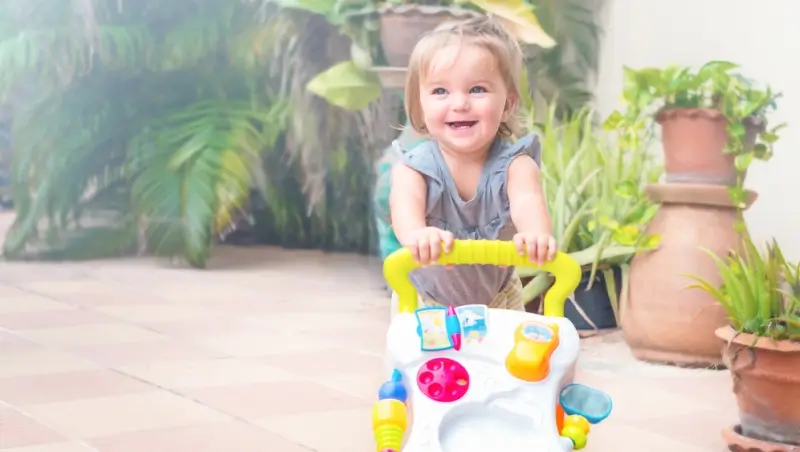
Some baby walkers are designed not only to support mobility but also to provide engaging activities. For example, the Classic World Baby Walker – Robot combines a walking aid with colourful interactive elements designed to encourage exploration and play.
Activity walkers like this can be appealing because they combine physical movement with sensory engagement. However, as with all baby walkers, they should always be used under close supervision.
Alternative ways to help babies learn to walk
Many child development specialists suggest encouraging walking through natural movement rather than relying solely on baby walkers.
Here are a few simple ways parents can support early walking skills:
Hand support
Holding your child’s hands while they take steps provides reassurance and balance as they practice walking.
Push toys
Push toys, carts, or activity walkers that babies can hold and push along the floor offer support while allowing children to control their own movement.
Safe exploration
Creating a safe play space where babies can crawl, stand, and pull themselves up helps them build strength and confidence as they prepare to walk.
Making an informed decision about baby walkers
Choosing whether to use a baby walker ultimately depends on your parenting style, your child’s needs, and the environment in which the walker will be used.
While baby walkers may offer entertainment and encourage movement, they should always be used carefully and under close supervision. It can also be helpful to discuss their use with a paediatrician or child development specialist.
By understanding both the benefits and the risks, parents can make thoughtful decisions that support their child’s development while keeping safety a top priority. As children become more confident walkers, their play often expands into imaginative activities such as pretend play and storytelling.
Frequently asked questions about baby walkers
At what age can babies use a baby walker?
Most baby walkers are designed for babies between 4 and 10 months old, depending on their physical development. Babies should have good head control and be able to sit upright before using a walker. Always check the manufacturer’s age and weight recommendations before purchasing.
Do baby walkers help babies learn to walk?
Baby walkers may allow babies to practice moving their legs, but they do not necessarily help babies learn to walk sooner. Many child development experts believe that babies develop walking skills best through natural movement such as crawling, standing, and cruising along furniture.
What should parents look for when buying a baby walker?
When choosing a baby walker, parents should look for strong construction, a wide and stable base, adjustable height settings, and safety features such as stair guards or anti-slip grips. Walkers with activity trays can also provide additional entertainment during playtime.
Are push walkers better than seated baby walkers?
Push walkers are often considered a safer alternative because babies remain standing behind the toy rather than sitting inside it. This allows them to practice balance and natural walking movements while still receiving gentle support.
How long should babies use a walker each day?
Child safety organisations such as the American Academy of Pediatrics recommend limiting baby walker use and ensuring babies have plenty of time for natural movement such as crawling and standing.
Are baby walkers banned in some countries?
Yes. Baby walkers are restricted or banned in some countries due to safety concerns. For example, Canada has banned the sale of traditional baby walkers because they can allow babies to move quickly and reach hazards such as stairs or hot surfaces. In many other countries, baby walkers are still available, but parents are encouraged to use them carefully and always supervise babies during use.




0 Comments